In 2012 I wrote this essay for a class called "Contextual Nature of Product design". I'm now publishing here so I will be able to reference it easily at a later date and to make sure it doesn't become lost in the sea of files on my hard-drive. I'm also posting it here because I believe it is still somewhat relevant to my beliefs as a designer in the modern world. My research during 2012 as a third-year undergraduate played a role in my ideas today. My ideas have changed since 2012, and they are continuing to evolve as I continue to learn. I realized that I truly enjoy research, and I believe it is one of the most valuable tools I have as a designer.
Work has developed in many ways since the industrial revolution. The industrial revolution saw the birth of mass production, assembly lines and factory work. The environment of work changed. People, who once worked at home, in their own workshops as craftsmen or on their own farms, were now leaving home to go to work at massive factories or began working for large companies ("The industrial revolution," n.d.). There was also a massive growth of new inventions and technology, leading to many new work trends inside and outside the home (Cowan, 1976, p.1). It was also during this time that people began to develop an appreciation for the need of trained a trained labor force, as adult workers who had previous experience as factory workers were often paid more than untrained workers (Galbi, 1997, p. 9). This rapid growth has continued throughout the last century and the nature of work has continued to change.
(Essay introduction continues after break)

Wednesday, 8 October 2014

Wednesday, 1 October 2014

On my reading list: Design Books
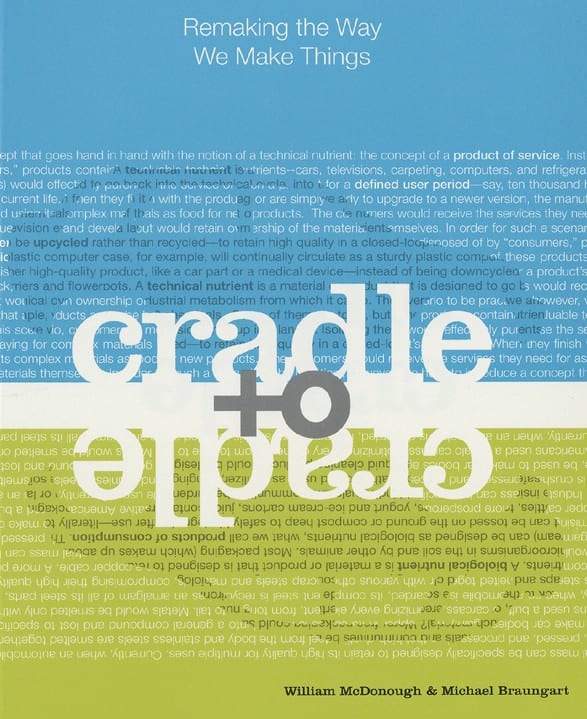 Cradle to Cradle: Remaking the Way We Make Things
by William McDonough & Michael Braungart
The book looks at how to "do more with less in order to minimize damage," and examines manufacturing techiniques and environmentalism. I'm currently reading this book and it is fascinating.
 Materials for Inspirational Design
by Chris Lefteri
An amazing book but impossible to find. The book provides informative inspiration for design as well as an introduction to the properties of various materials such as wood, metal, glass, ceramics and plastic.

Making It: Manufacturing Techniques for Product Design
by Chris LefteriYet another beautiful, informative and inspirational book that is difficult to find. "It''s the only designer''s guide to a broad range of production methods: from liquid, plastic and solid-state forming to different methods of cutting, moulding and machining, from rapid prototyping to finishing."

The Graphic Artists Guild Handbook: Pricing & Ethical Guidelines
by the
The book goes in depth about copyright issues and contains contract and model release templates. It provides key knowledge for graphic designers and illustrators who are new to the industry. While I'm more involved in the product and UX design industry, I belive this would still be valuable knowledge to have. "As the graphic art marketplace continues to evolve to meet the needs of both digital and print media and as clients struggle with shrinking budgets in the current economy, the need for up-to-date information on business, ethical, and legal issues is greater than ever."
(And all the textbooks and articles I'm currently reading at school!)
T.
Friday, 26 September 2014
From Buckets to Rain Barrels

Hello!
I'm participating in a project with Carleton University School of Design, we're going to Tanzania to collaborate with the community in Longido and solve issues surrounding water collection, agriculture, and waste disposal.
The challenging climate of the Longido District in Tanzania contributes to a chronic water shortage. Longido District lies just north of Arusha and west of the slopes of Mt. Kilimanjaro, in the heart of the Maasai culture. This region has a dry savanna climate. The district experiences extended periods of severe drought alternating with heavy seasonal rains that cause excessive flooding. Villagers have almost no means to capture and divert rainwater for community use, resulting in a chronic water shortage. Because of this water shortage, there is very little production of food crops in the immediate region, resulting in high levels of food insecurity.
The issues aren't just limited to water collection. Many issues exist surrounding other topics such as building materials and indoor lighting. I'm currently doing a lot of research into children's play spaces, community spaces and education, as well as agriculture with the use of reclaimed water.
The goal is to design something through co-creation that fits the specific needs of the community and can be built & maintained by the people living in Longido. We'll be working closely with the people in the village to assist with projects and participate in an exchange of knowledge and design practices.
We need to raise money to help fund the project and we'd really appreciate any help!
You can donate here:
http://futurefunder.carleton.ca/projects/from-buckets-to-rain-barrels/
More of our research can be found here:
http://tanzandesign.blogspot.ca/
Cheers!
T.
Monday, 1 September 2014

Wednesday, 20 August 2014
Reflecting on my internship
 |
| The portfolio page of DV [UX] - I had a chance to contribute to some of the projects shown here. |
DV [UX] is a design firm located on Elgin Street in the Downtown area of Ottawa, Ontario. The firm provides design services such as architecture, branding and UX(user experience) design. For the last 16 months I've been an intern / junior designer, working on UX and Graphic design projects. I've had so much fun and great experiences. It's been a blast, and I've learned so much about UX design. I feel like I have access to a whole new world of design opportunities.
Research & User Testing
I feel that I've learned valuable tools for usability testing in UX design. We study various user testing methods in school, but it was fascinating to see these tools put to use in the real world. Part of my responsibilities included interpreting information from focus groups, and gaining understanding of the user needs & wants. I used this information to create rich and compelling designs that were aligned with user feedback.In another project, I worked with the UX Interaction researcher, and helped to create the initial prototypes to be used in user testing. I provided high-fidelity mockups with some functionality for use in beta-testing. I was then able to participate in and observe beta-testing of my designs to understand how the user really perceived the interface. During this process I collected notes from the tests and user interviews, that I later used in the final project designs.
New Programs & Tools
I feel that I gained valuable skills with new programs. |
| I made this nifty mock-up using fireworks. |
- Fireworks - While it is not my favorite program to work with, it very useful in its own ways. My favorite aspect of this program was how easily and seamlessly I could work with both vectors and rasters in the same project. The addition of animation was great, allowing me to produce some compelling animated mockups when trying to give a client an understanding of the concept. However, the bugs in this program were occasionally very frustrating. Adobe has now discontinued the application and I don't believe it will be a major design tool for me in the future. That being said, I'm still happy to have the knowledge.
- Flash- I'll admit I'm not a pro with flash yet. I didn't work with it as much as I'd like to, but I did have a few opportunities. I made several simple "working" hi-fidelity prototypes of widgets and menus. I learned some simple code for Actionscript 3.0 and I now have the ability to create motion animations and simple movies. With a bit more practice, I'd like to create more complex animations.
- Balsamiq - A simple program that I really enjoy working with. It's easy to produce many clear and concise workflows very quickly. The limited visuals forced me to focus on the interactions rather than get caught up on appearance too early on in the design, and similarly allows the clients to focus on the concept as well.
- Wordpress - I had fantastic fun creating websites with this program. During the past few months I got to work on a few small sites, including the company website, and a site for a racing team.
- Moodle - Near the end of my work term I began working with Moodle. I didn't get to work in depth with it, as I was only present for the beginning of the project. However, learning about the LMS(Learning Management System) that is used by many institutions, including Carleton University, was pretty cool.
Design specs, Visual design and Asset production.
This knowledge is very valuable. I learned how to create pixel perfect assets and design specfications. I worked closely with developers to understand their needs and developed my ability to respond quickly to design requests. I also learned to how to create font-based assets for applications and websites using illustrator. On some projects, I worked with different visual designers and learned from their knowledge and skills. On other projects, I also the opportunity to provide visual design.I really did enjoy my time at DV [UX]. With this experience I feel more confident. While I now feel more open to digital design (graphic, web and UX) I still really enjoy product design. I'm looking forward to seeing where my passions take me.
I'll be going into my fourth year of Industrial Design. Big projects and exciting designs await!
Cheers,
T.
Thursday, 14 August 2014
Throwback Thursday: Cardboard Dog House Project


One of my first major projects in first year at Carleton SID. This project was actually quite a bit of fun, even if it was a bit odd. Building designer cardboard doghouses was a creative exercize, and I quite enjoyed making "Ikea-style" instructions to go along with it.
 |
| To test if our instructions were effective, we had to trade projects with another design student and try to build each others projects. It was good fun! |
Subscribe to:
Posts (Atom)